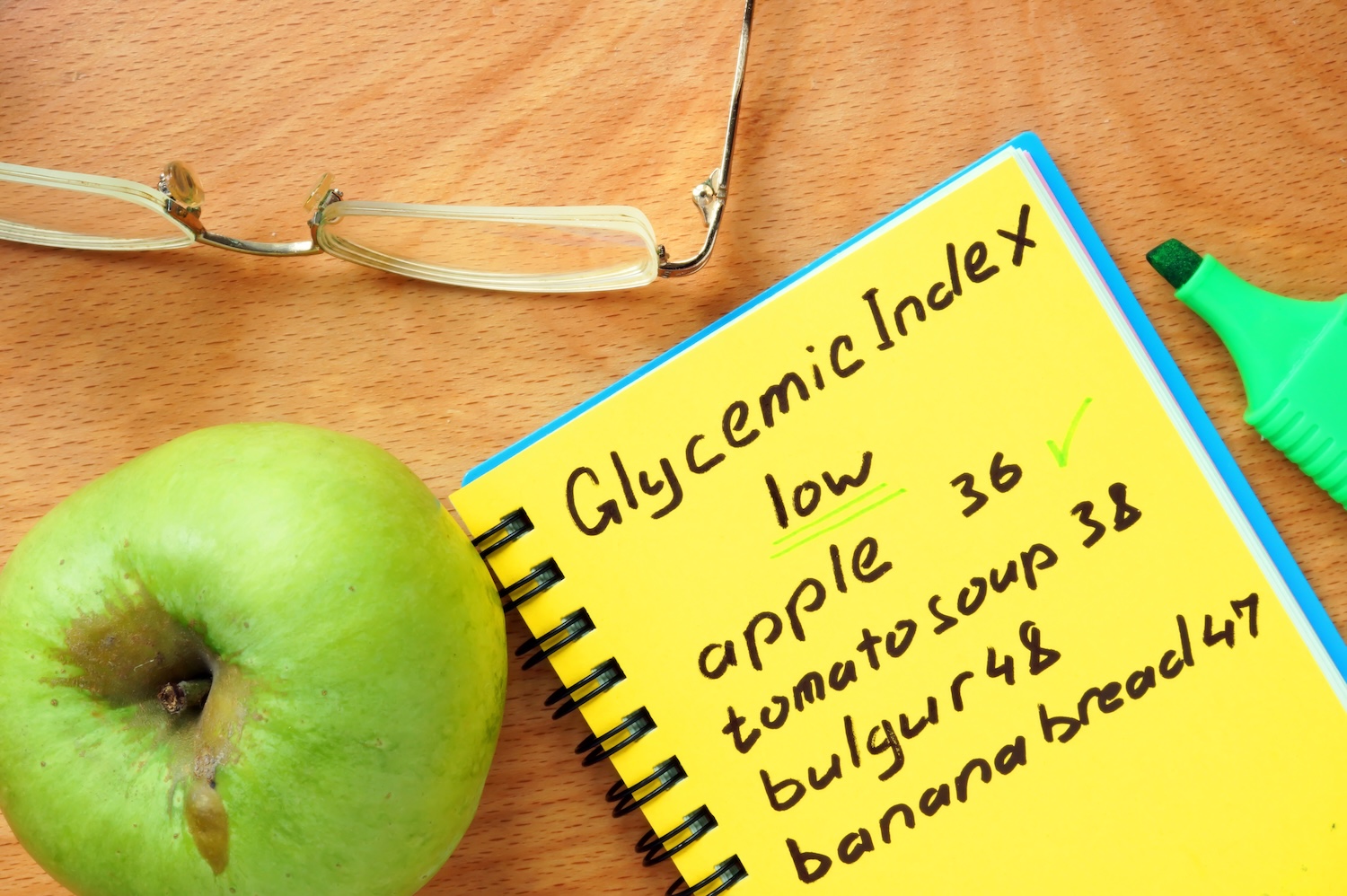
Everyone keeps shouting “high GI bad, low GI good.”
Sorry, but that’s oversimplified nonsense.
Here’s the truth most people don’t want to hear:
👉 Not all high-GI foods are harmful.
👉 Not all low-GI foods are healthy.
👉 Portion size and total carbs matter FAR more than GI.
Let me explain — simply and scientifically.
Glycemic Index = how FAST a food raises blood sugar compared to pure glucose (GI = 100).
It’s not measuring how much sugar enters your blood.
Just the speed.
Useful for diabetics, yes.
Misused by everyone else, absolutely.
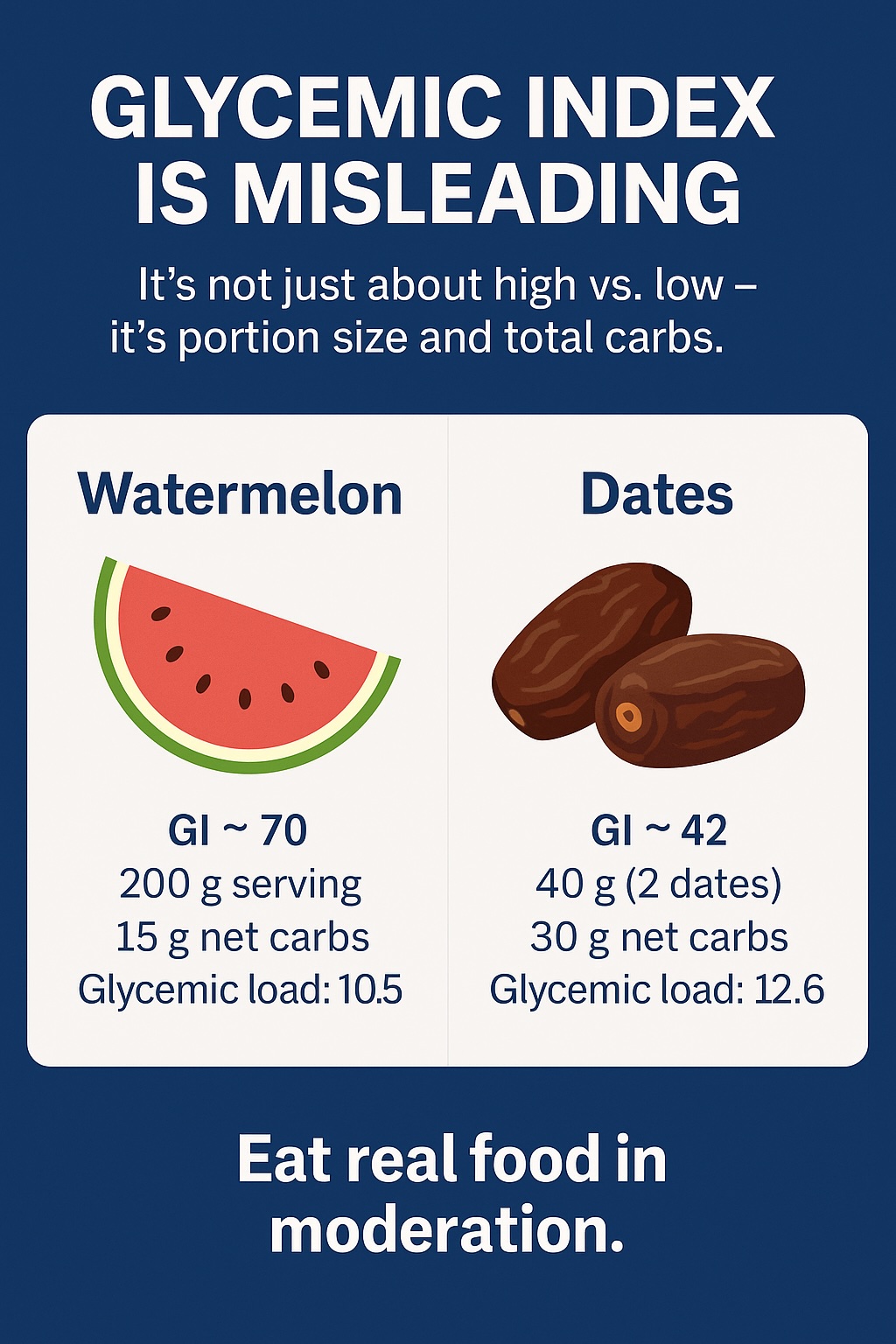
Watermelon has a GI of ~70 — same as white rice.
Sounds scary?
Only if you ignore basic math.
A typical 200g serving of watermelon has ~15g net carbs.
Glycemic Load (GL) = GI × carbs ÷ 100
GL = 70 × 15 ÷ 100 = 10.5
A GL above 20 is considered high — for diabetics.
Conclusion?
Watermelon is absolutely fine for most people.
High GI, low actual impact.
Dates have a low GI (~42).
So everyone uses them as “healthy sugar.”
Except… they forget the load.
Two medium dried dates (~40g) = ~30g carbs.
GL ≈ 12.6
That's HIGHER than 200g of watermelon.
And in chocolate bars or “healthy sweets,” you need a LOT more dates than sugar to get the same sweetness… and because it’s marketed as “natural,” people eat double.
Low GI, high load = misleading health halo.
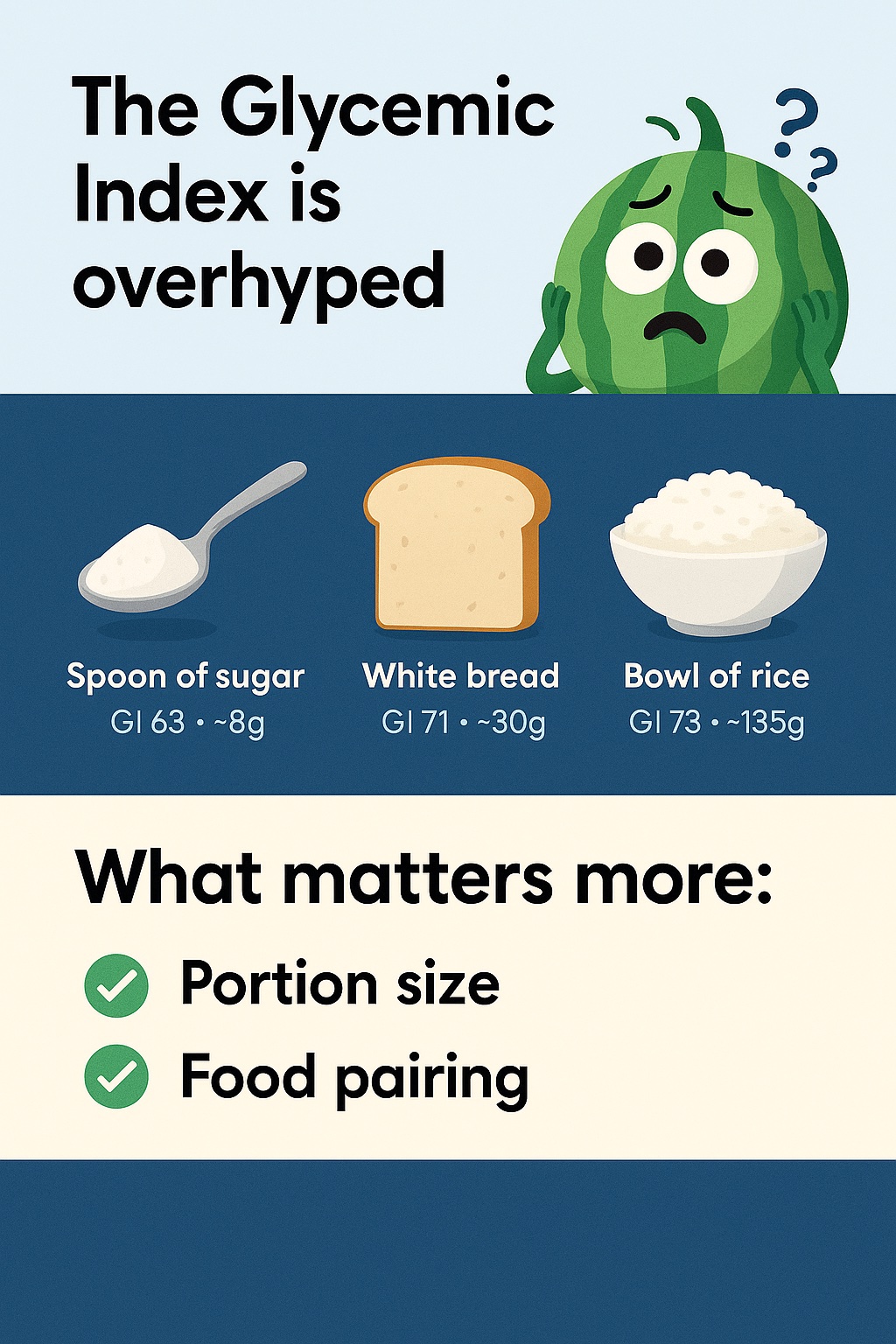
Stop demonizing single numbers.
Stop glorifying “healthy substitutes.”
Stop copy-pasting GI charts without context.
Focus on:
If a recipe calls for sugar, use sugar.
If it needs jaggery, use jaggery.
If it needs dates, use dates.
Food isn’t supposed to be “bio-engineered healthy.” It’s meant to be enjoyed — in moderation.
That’s the part people forget.
If you found this simple, you’re welcome.
If it made you uncomfortable… even better. 😉