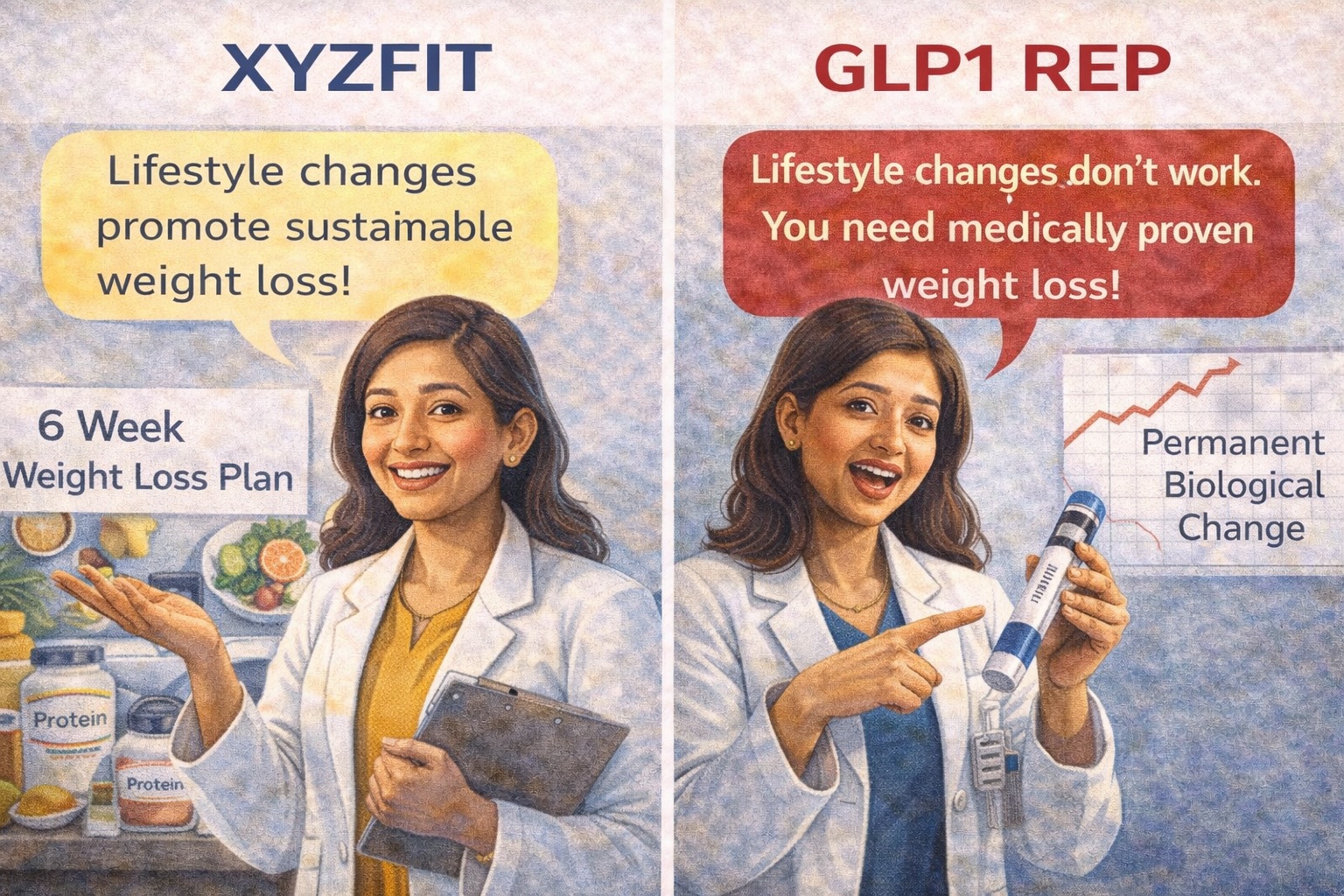
Over the past few months, GLP-1 medications like Ozempic, Wegovy, and Mounjaro have gone from being clinical tools to mass-market headlines.
What’s more interesting is who is now advertising them.
Many of the same companies that were, until recently, selling lifestyle programs, diet plans, supplements, and “sustainable weight loss” courses have suddenly changed their narrative.
Lifestyle doesn’t work, they now say. Biology must be fixed. GLP-1 is the answer.
GLP-1 medications don’t “melt fat.”
They don’t magically fix metabolism.
What they do — very effectively — is reduce appetite and food cravings.
That’s it.
And that’s powerful.
For someone who is already motivated, already trying, and already understands what weight loss requires, GLP-1 simply removes the biggest friction point: constant hunger.
In other words, GLP-1 fast-tracks something people have always attempted on their own — a calorie deficit — but struggled to sustain.
GLP-1 is not a one-time solution.
For most users, it becomes:
What many ads don’t disclose clearly is that stopping GLP-1 abruptly without the right lifestyle foundation often leads to regain.
This doesn’t make GLP-1 bad.
It makes how it’s used extremely important.
Yes — but only if used correctly.
A 3–6 month GLP-1 phase can work as a powerful accelerator if users simultaneously:
Without this, GLP simply postpones the problem.
Indians have a unique metabolic profile:
GLP-1 suppresses appetite — but appetite suppression without guidance often leads to:
This is not a failure of GLP-1.
It’s a failure of support systems.
For over 100 years, weight loss remained an unorganised market:
Despite billions in value, obesity kept rising.
GLP-1 changes that equation. Pharma now owns the most effective lever we’ve ever had for appetite control.
But appetite control alone is not health.
Behavior, nutrition, muscle preservation, and long-term adherence cannot be solved by a prescription alone.
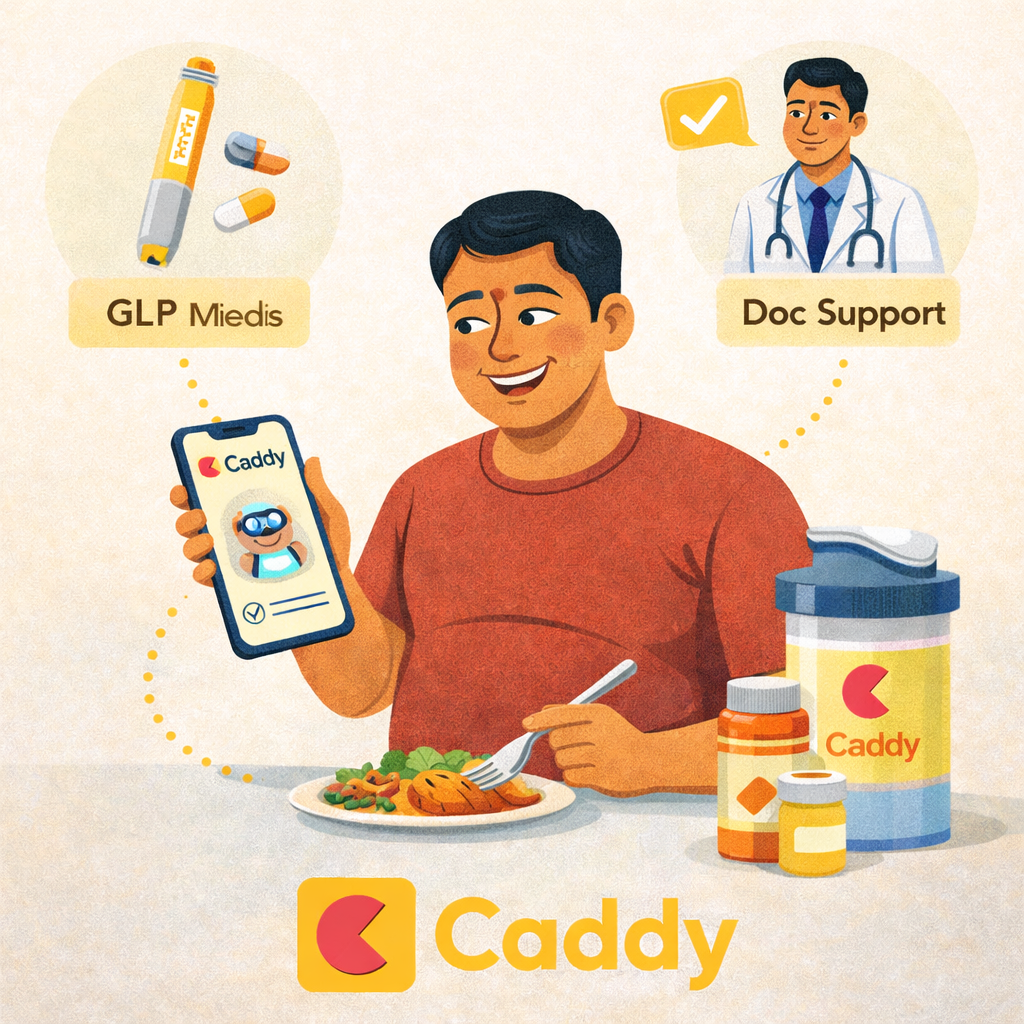
If we truly want to reduce obesity — not just sell medication — the future must combine:
GLP-1 is an incredible discovery.
But it works best when used thoughtfully, temporarily or long-term, with the right system around it.
The real question isn’t whether GLP-1 works.
It’s whether we’re ready to use it responsibly.
GLP1 meds (ozempic, mounjaro etc) are a god send. Side effects are minimal and can be managed easily. Just need to take care of some simple basics to go with it. Try getcaddy.ai