Every few months a new food comparison trend appears on social media.
“Rice is worse than roti.”
“Roti is healthier than rice.”
“Dal is low protein compared to chicken.”
Most of these conclusions come from incorrect food comparisons.
The truth is simple: foods are often compared in the wrong way.
Understanding how to compare foods properly can help you make better food decisions without falling for nutrition myths.
Before comparing foods, it is important to remember that food is not just about calories, protein, or carbohydrates.
Food serves multiple roles:
For centuries, culinary traditions across India have evolved food pairings that work well both nutritionally and gastronomically.
Examples include:
These combinations exist because foods complement each other.
For example:
Together they create a balanced meal.
This is why looking at foods in isolation can often be misleading.
The first rule of food comparison is simple.
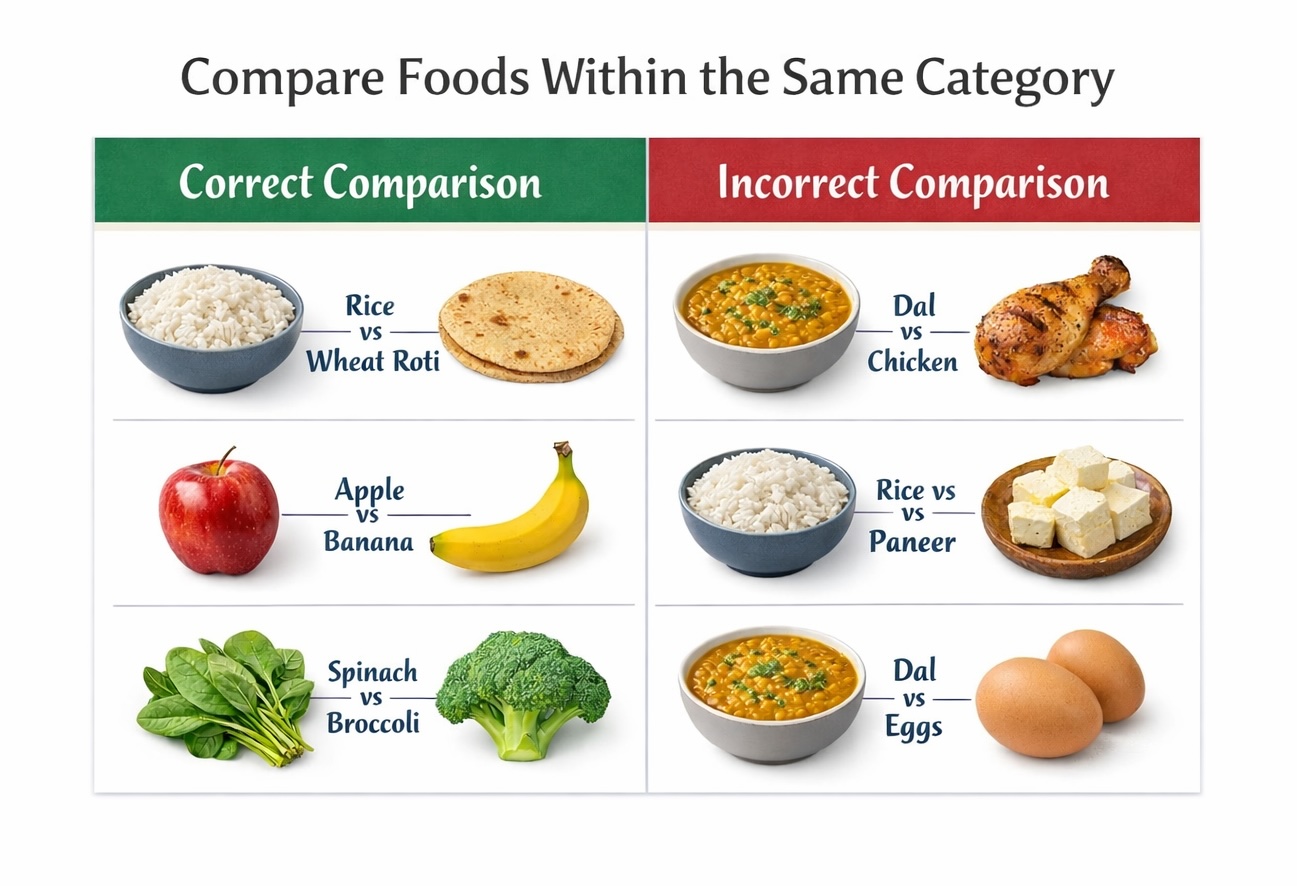
Comparing foods across categories leads to meaningless conclusions.
Saying dal has less protein than chicken is like saying Virat Kohli is a worse swimmer than Michael Phelps.
They are simply playing different roles.
One of the most common examples used online is the comparison between rice and wheat.
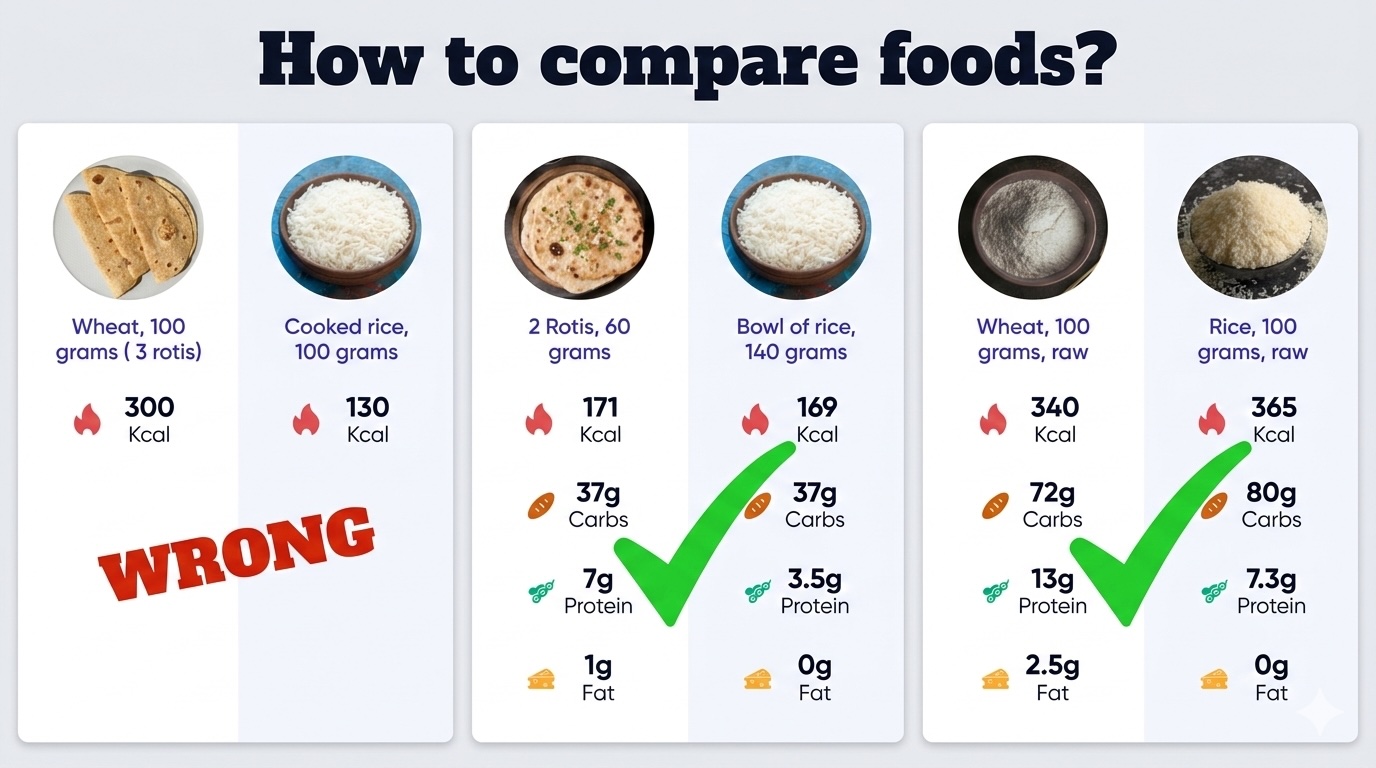
You may have seen something like this:
The conclusion often shown:
Rice has fewer calories than wheat, therefore rice is better for weight loss.
This comparison is misleading.
Rice and wheat behave very differently when cooked.
Rice absorbs a large amount of water during cooking.
Wheat (in the form of roti or chapati) absorbs very little water.
This means 100g cooked rice is not comparable to 100g wheat flour.
To make a fair comparison, we need to compare standard servings, not random weights.
Typical serving sizes:
Now compare the real servings.

When compared this way, rice and wheat have very similar calorie and carbohydrate profiles.
The answer is simple.
Eat based on taste, pairing, and meal composition.
Indian meals already follow this logic.
Examples:
Food combinations evolved this way because they create balanced meals naturally.
The real lesson here is not about rice vs wheat.
The real lesson is about how we interpret food data.
Many viral nutrition comparisons:
This leads to confusion and unnecessary food fears.
Most people today rely on:
But nutrition decisions require accurate and contextual food data.
This is where Bon Happetee and Caddy come in.
Indian meals are complex.
A typical Indian plate may contain:
Each of these contributes to the total nutrition of the meal.
Bon Happetee has spent years building one of the most comprehensive Indian food nutrition databases, designed for real-world meals.
Think of it as the IMDB of Indian food data.
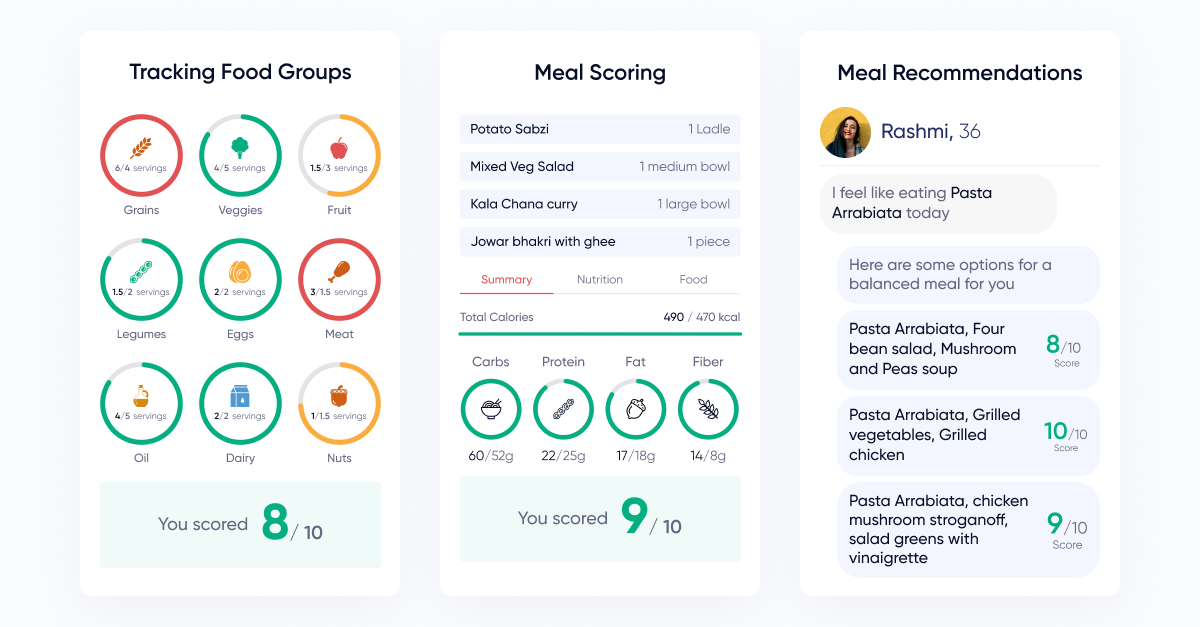
Caddy uses Bon Happetee’s structured nutrition data to help users understand their meals better.
Instead of confusing nutrition myths, Caddy focuses on:
Whether you are tracking for weight loss, metabolic health, or GLP-1 support, the goal is to keep food choices simple and practical.

Comparing foods the wrong way leads to unnecessary confusion.
Remember these simple rules:
✔ Compare foods within the same category
✔ Use real serving sizes
✔ Consider how foods are cooked
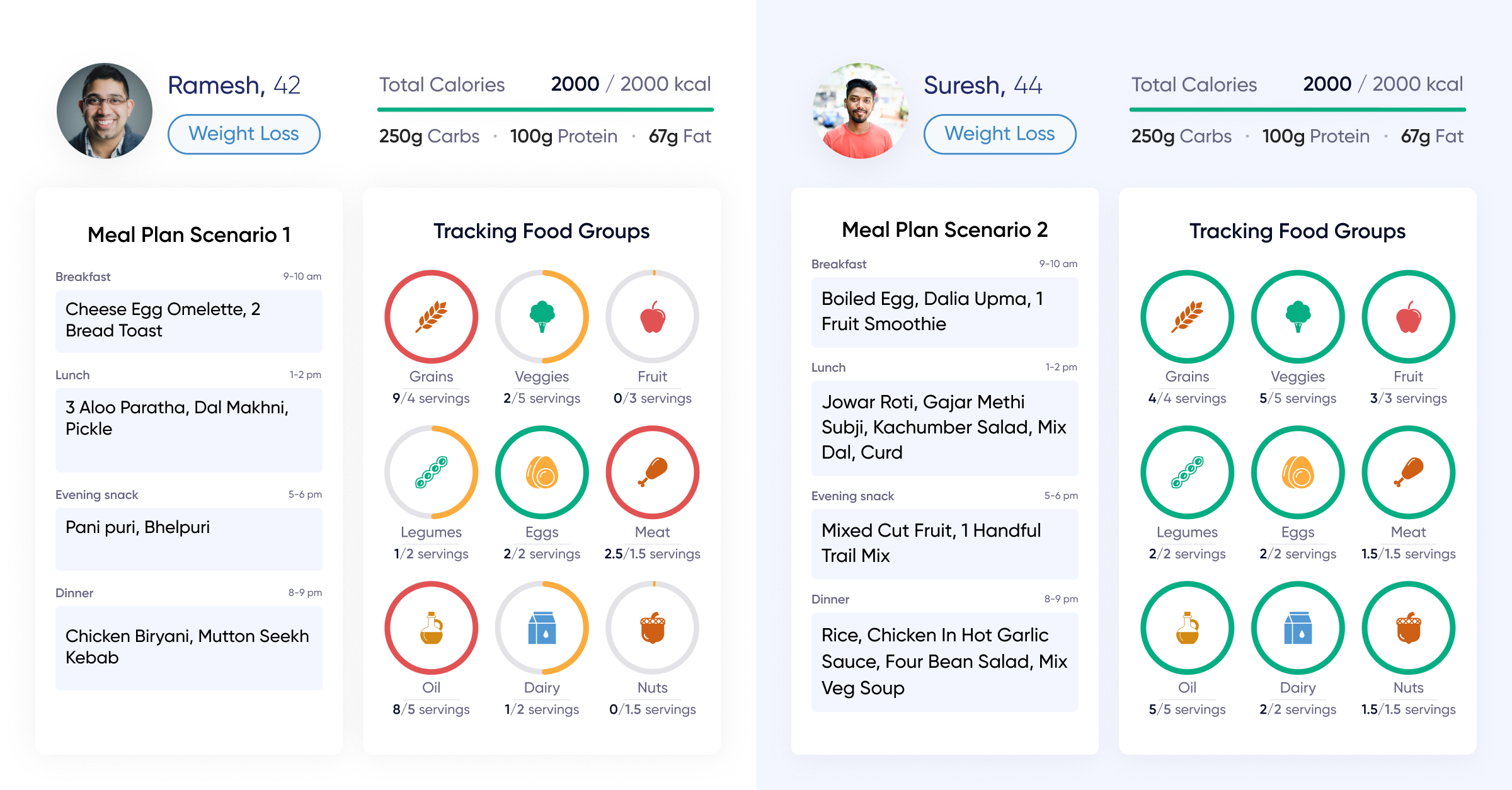
✔ Think about meal combinations, not single foods
And most importantly:
Eat foods the way chefs and cultures designed them.
Roti with sabji.
Rice with dal.
Sometimes the simplest nutrition advice is also the most accurate.
Making Indian nutrition simple, practical, and data-driven.
At bon happetee, we have spent the last 10 years designing and building a comprehensive and in depth Indian food database - exactly what your AI apps, agents and LLMs need - A world class Indian food database - We are the IMDB of Indian food.