Personalized nutrition sounds great in theory.
Answer a few questions, get a “custom” meal plan, and watch your health improve.
Except… that’s not how real life works.
If personalized nutrition had truly cracked the code, obesity, diabetes, and weight regain wouldn’t still be exploding — especially in India.
So what’s going wrong?
Most nutrition apps define personalization like this:
Five inputs in.
A neatly formatted meal plan out.
The result?
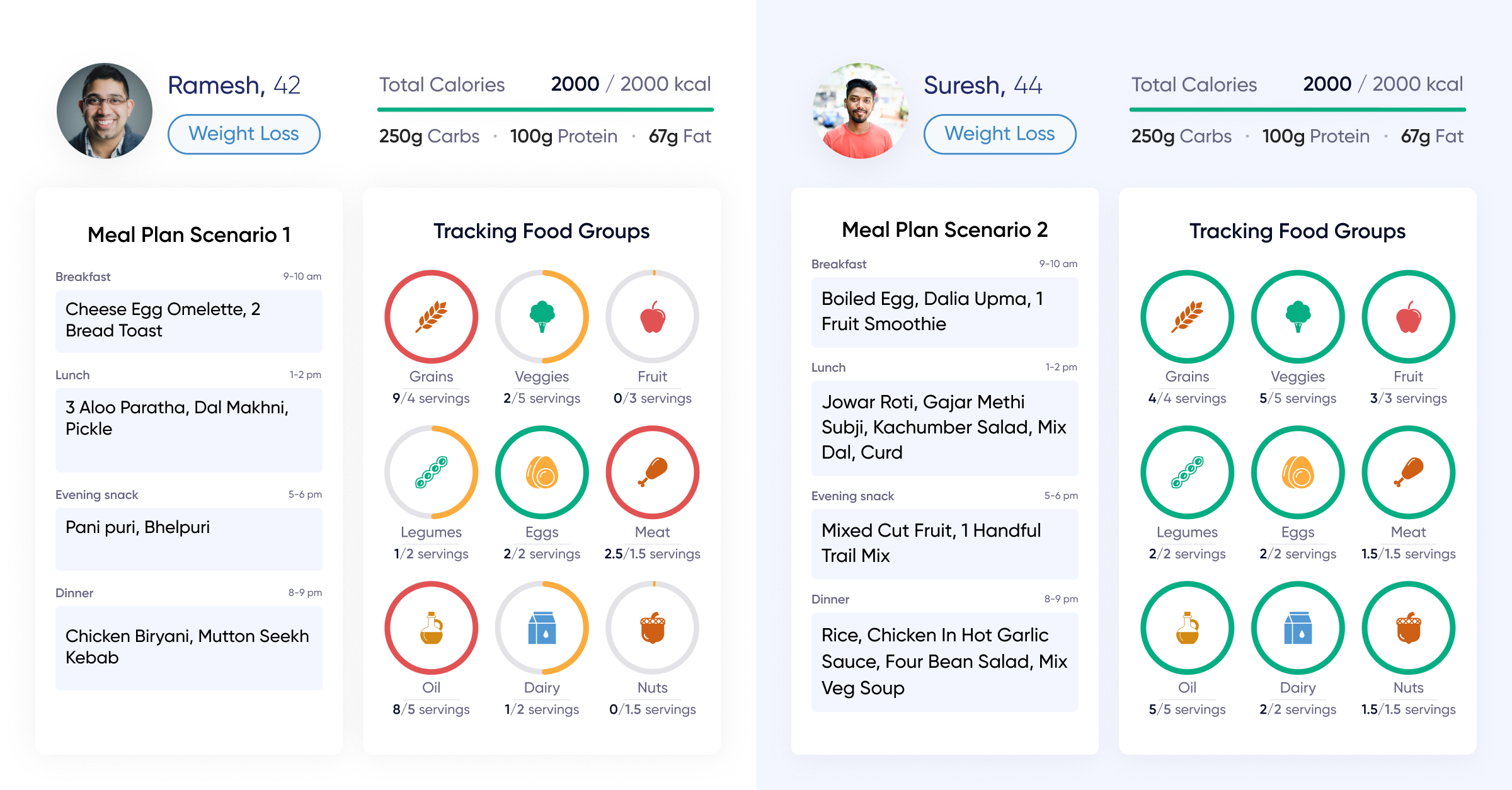
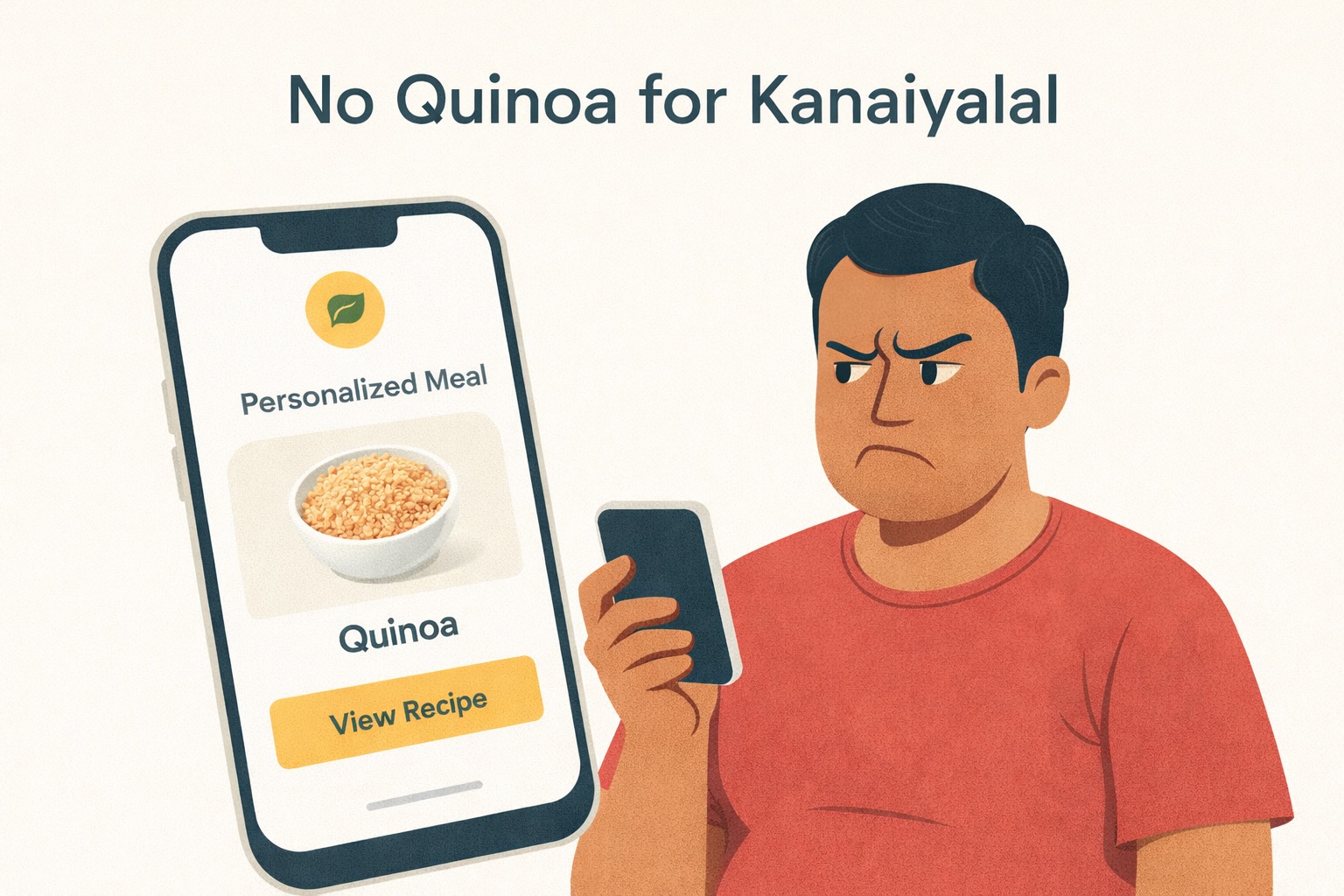
Quinoa for Kaniyalal.
Salmon salads for someone who eats dal-chawal every day.
Overnight oats suggested to people who’ve never eaten oats in their life.
Technically nutritious.
Practically useless.
Because nutrition doesn’t exist in isolation.

For most humans — not just Indians — three things matter more than macro precision:
Culture.
Convenience.
Taste.
These aren’t “nice-to-haves.”
They’re non-negotiables.
You can have the perfect macro split on paper, but if the food:
…it won’t be followed. Period.
Nutrition needs to adapt to life — not force people to adapt their lives to nutrition.
India adds another layer of complexity.
Yet most global or even Indian apps rely on Western food databases and generic portion assumptions.
So when an app “recognizes” a katori of dal as a bowl of lentil soup with 20g protein — while the real protein is closer to 4g — personalization quietly breaks.
And once trust breaks, consistency follows.
If we truly want personalized nutrition to work, the conversation needs to shift.
A practical AI-powered nutrition system should sound more like this:
“Keep eating what you already eat — I’ll show you where to tweak.”
“Upload a photo of what’s in your kitchen. I’ll suggest meals you’ll actually cook.”
“You eat paneer often. Want higher-protein paneer dishes instead of replacing it?”
That’s personalization.
Not replacement.
Not restriction.
Not aspiration.

The biggest enemy of health change isn’t lack of information.
It’s friction.
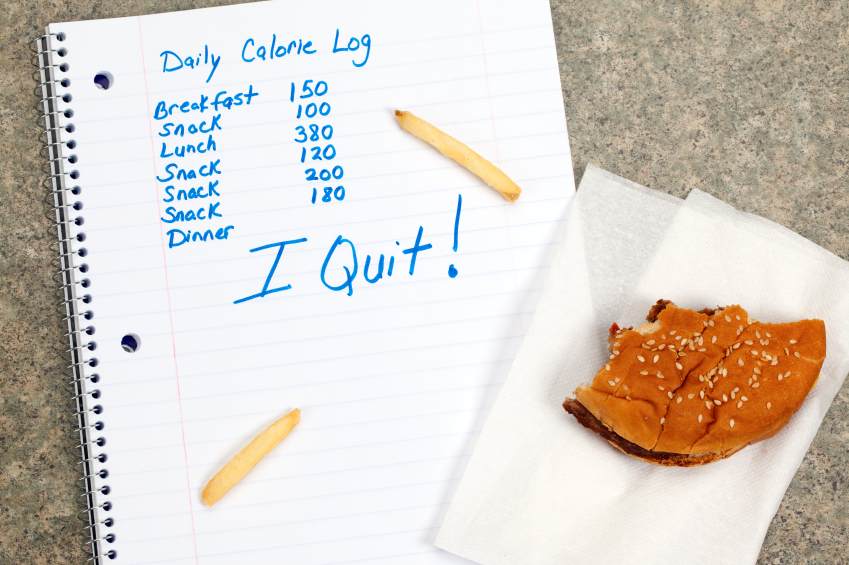
This is why calorie tracking apps often fail — not because calorie tracking doesn’t work, but because they’re designed without cultural context and then expect motivation to do the heavy lifting.
The best systems fade into the background.
Much like Netflix quietly introducing K-dramas into my wife’s evenings — without a single conscious decision involved.
That’s the bar.
Even today, most apps only show:
There’s no sense of momentum.
No sense of “am I doing okay today?”
Which is why users burn out.
People don’t need more numbers.
They need clarity and reassurance.
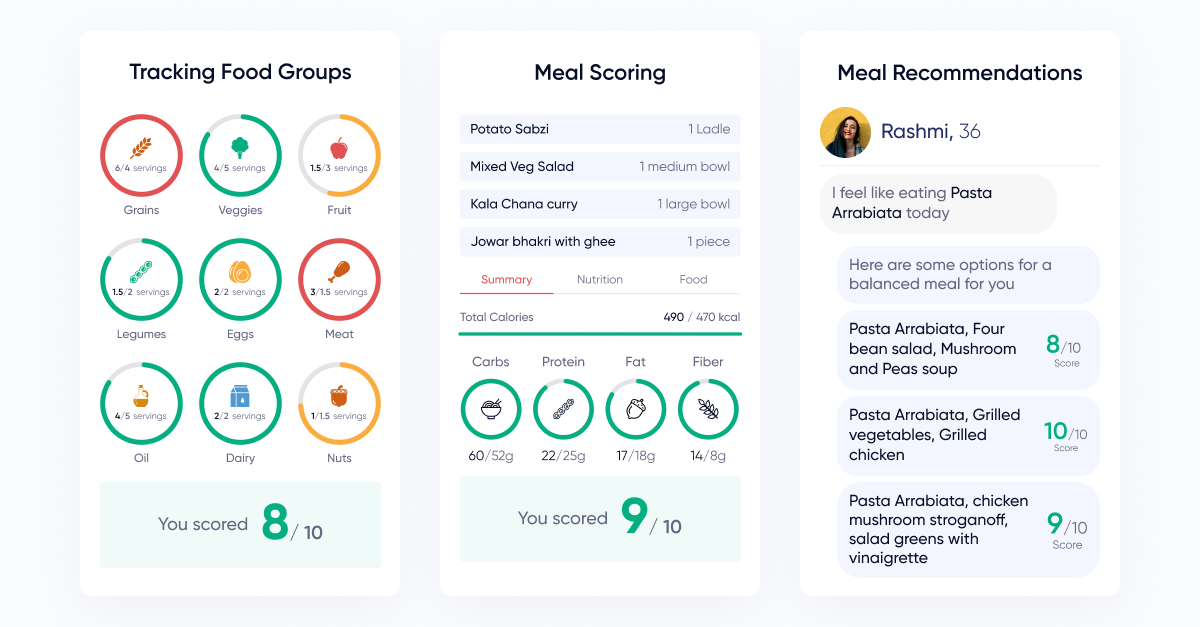
Simple scoring.
Clear feedback.
Small nudges.
The future of personalized nutrition — especially for Indians — won’t be won by:
It will be won by systems that understand:
No quinoa for Kaniyalal.
No lentil soup instead of dal.
No pretending food exists outside culture.
Personalized nutrition doesn’t fail because people lack discipline.
It fails because it ignores reality.
The moment nutrition tools start working with culture instead of against it, adherence stops being the problem.
And that’s when results finally stick.
For over a decade we have been adressing these core issues in our database - bon happetee (the IMDb of Indian food)