If you follow food trends long enough, you start noticing a pattern.
Every few years, a new villain appears.
Fat.
Carbs.
Gluten.
Seed oils.
And now, the latest villain of modern food marketing:
“Processed sugar.”
Not sugar.
Processed sugar.
Because apparently the word processed makes it sound far more dangerous.
But if you look a little closer, the story starts to fall apart.
Today, many brands proudly claim their products contain:
Instead, they use ingredients like:
All marketed as natural alternatives to processed sugar.
The implication is clear:
If sugar is processed, it must be bad.
But here’s the irony.
Almost everything we eat is processed.
The term processed food has become one of the most misunderstood concepts in nutrition.
Processing simply means any transformation of raw food into a form we can eat, preserve, or store.
By that definition, many everyday foods are processed:
Even basic ingredients like salt and cooking oil are processed.
In fact, without processing, most foods would be inedible, unsafe, or impossible to store.
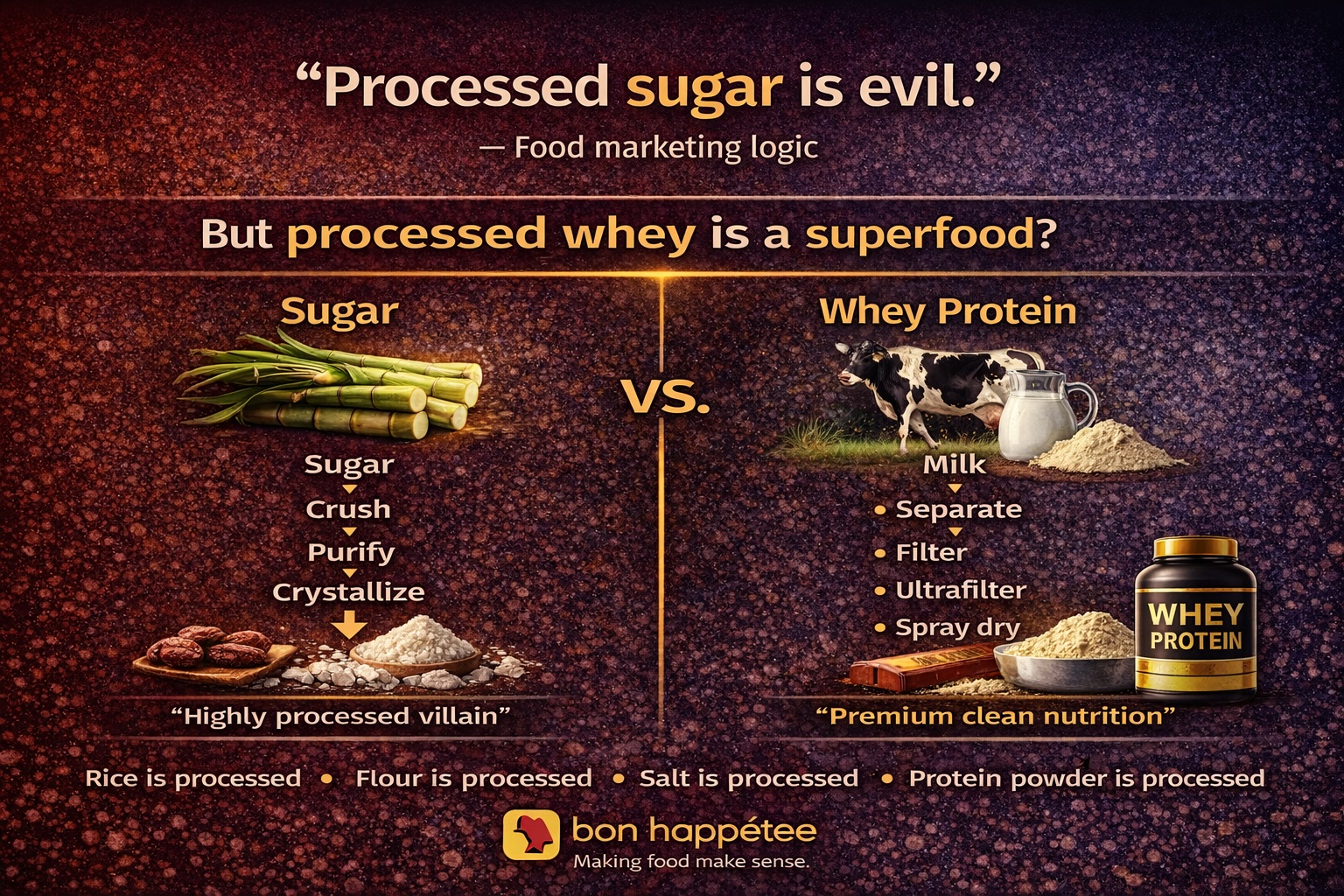
Let’s take the so-called villain: processed sugar.
Sugar typically comes from sugarcane or sugar beet.
The process looks something like this:
That’s essentially it.
Compared to many other modern food ingredients, the process is relatively straightforward.
Here’s where the story becomes interesting.
Many of the same brands that criticize “processed sugar” proudly market products containing:
Whey protein is widely considered a premium nutrition ingredient.
But from a food technology perspective, whey protein undergoes significantly more processing than sugar.
Milk goes through multiple stages:
In other words, milk must go through a complex industrial process to become whey protein isolate.
Which raises an obvious question.
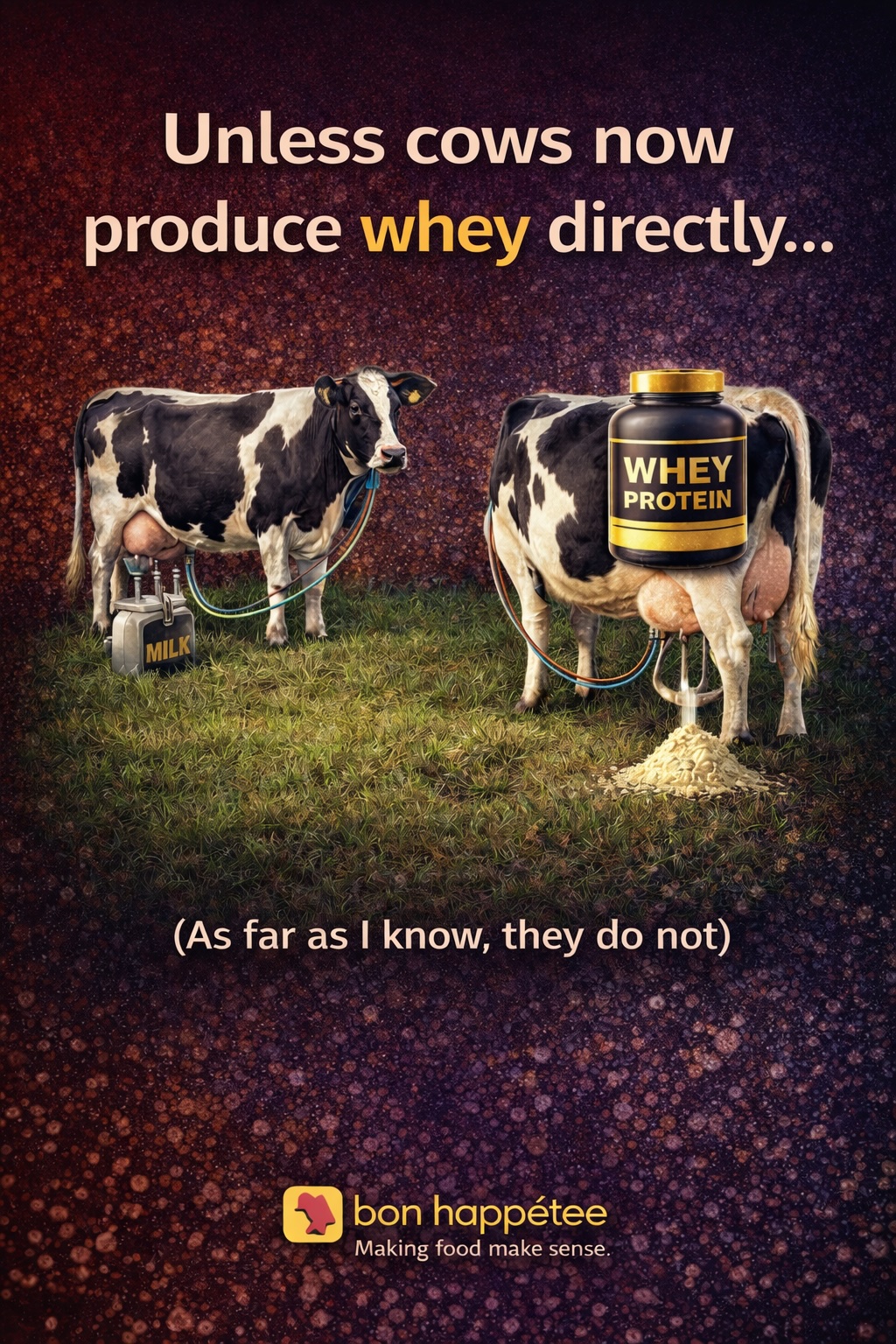
Unless someone has discovered cows that produce whey directly instead of milk, whey protein is far more processed than sugar.
Yet whey protein is celebrated as clean nutrition, while sugar is portrayed as the villain.
The problem isn’t food processing.
The problem is food marketing.
The word “processed” has become a storytelling tool used to create contrast between:
“good foods” vs “bad foods.”
For example:
But nutritionally speaking, dates are still primarily sugar.
The difference is largely about how the ingredient is positioned, not what it fundamentally is.
There’s another overlooked fact about food processing.
Sometimes processing actually improves health outcomes.
Take salt as an example.
Most table salt today is iodized, meaning iodine is added during processing.
This simple step has helped prevent widespread iodine deficiency — a condition that can cause serious thyroid problems and developmental issues.
If someone replaces iodized salt with fashionable alternatives like Himalayan pink salt, they may unknowingly remove an important source of iodine from their diet.
In this case, processing is not the problem.
It’s the solution.
To be clear, not all processing is equal.
Nutrition science does recognize a difference between:
Ultra-processed foods are typically industrial formulations that include:
These products are often engineered for taste, shelf life, and convenience, sometimes at the expense of nutritional balance.
But even here, the issue isn’t processing itself.
It’s how the food is formulated and consumed.
Food marketing thrives on simple narratives.
Good vs bad.
Natural vs processed.
Clean vs artificial.
But nutrition rarely works that way.
Most foods exist on a spectrum of processing and nutritional value.
Rice is processed.
Flour is processed.
Protein powder is processed.
Processing is simply a tool.
Whether it improves or worsens nutrition depends on how the food is used.
The idea that “processed sugar” is inherently evil is less about science and more about storytelling.
In reality:
The real challenge isn’t processing.
It’s understanding what we eat, how it’s made, and how marketing shapes our perception of it.
Because when it comes to food, the most powerful ingredient is often the story being told.