Walk down any supermarket aisle or browse through your favorite food delivery app, and you’ll see the same thing — “High Protein,” “Protein Rich,” “Source of Protein.”
These labels sound impressive. But are they actually backed by science — or are they just smart marketing?
Turns out, there is a standard. And it’s not arbitrary.
In India, the Food Safety and Standards Authority of India (FSSAI) has laid down specific guidelines that determine what qualifies as a “source of protein” or “high protein” food.
According to FSSAI, a food can be labeled as:
So yes, there’s actual math behind that label — not just marketing jargon.
For an average adult, the RDA for protein is approximately 60–80 grams per day, depending on age, gender, and activity level.
Let’s take the midpoint: 80 grams per day.
So if a food provides 8 grams of protein per 100 kcal, it qualifies as “High Protein.”
If it provides 4 grams of protein per 100 kcal, it’s a “Source of Protein.”
In simple terms, a food should get ~30% of its calories from protein to be considered high protein.
Now here’s where it gets interesting — your daily diet doesn’t need to be “high protein.”
On average, only 15–20% of your total daily calories should come from protein. So, a food can be “high protein” even if your overall diet isn’t.
Here’s how common foods stack up when we calculate protein per 100 kcal:
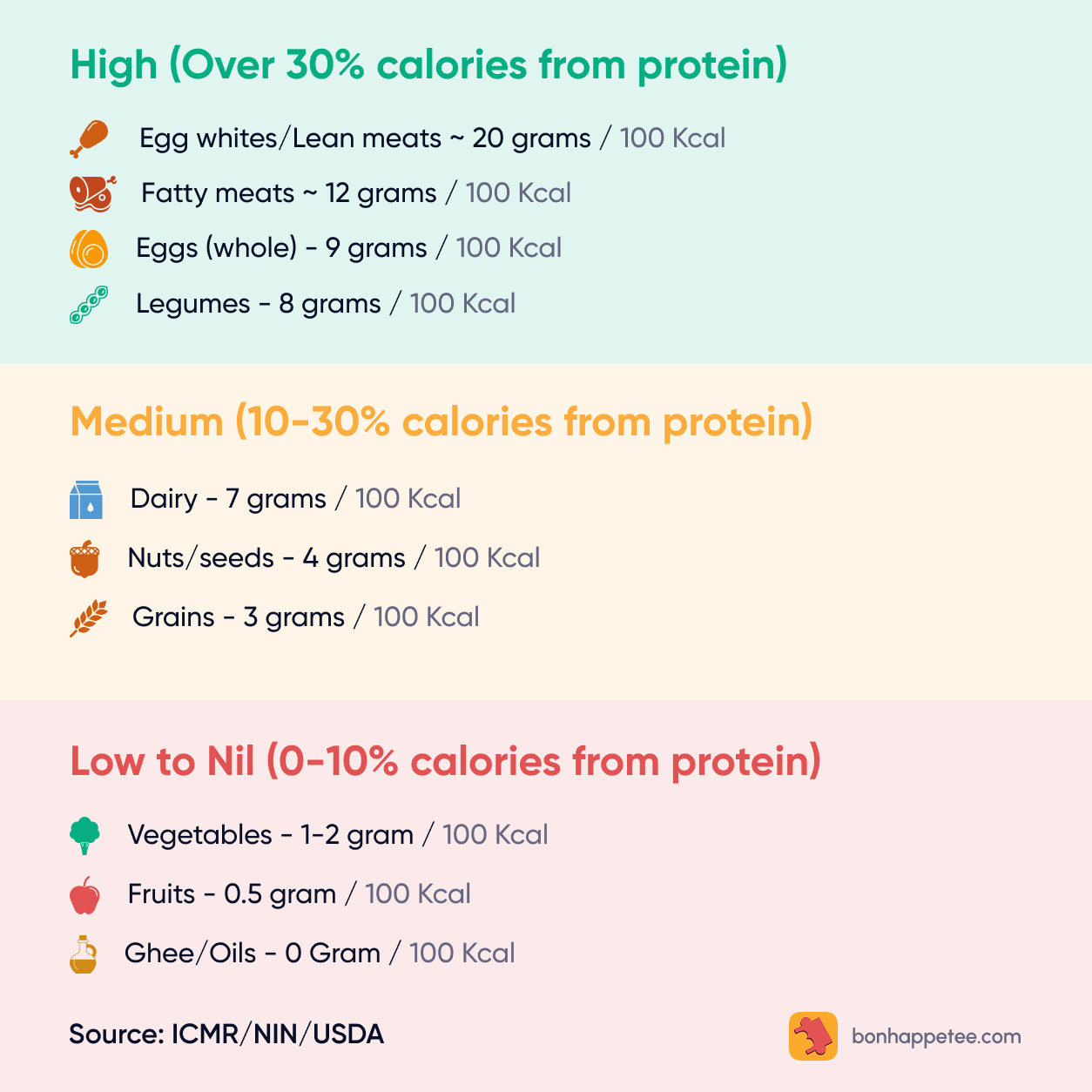
Here’s the nuance nobody talks about —
A food might be high protein as per FSSAI standards, but that doesn’t mean it’s high protein for you.
If you’re an average-weight Indian adult with moderate activity, dal might actually be a great source of protein.
Let’s do the math:
So, for most Indians, dal is indeed a high-protein food.
But for an athlete or someone with very high muscle mass, that might not be enough.
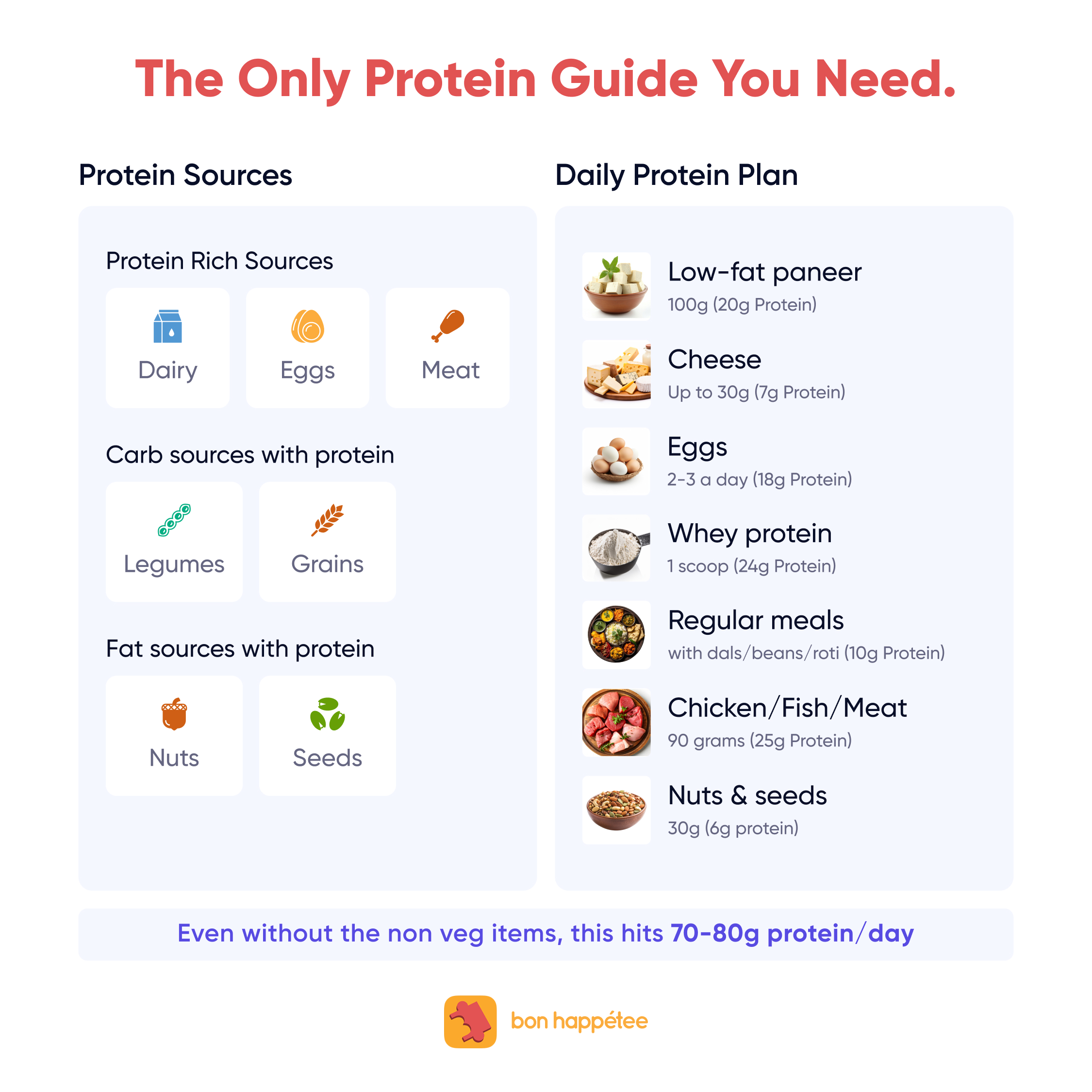
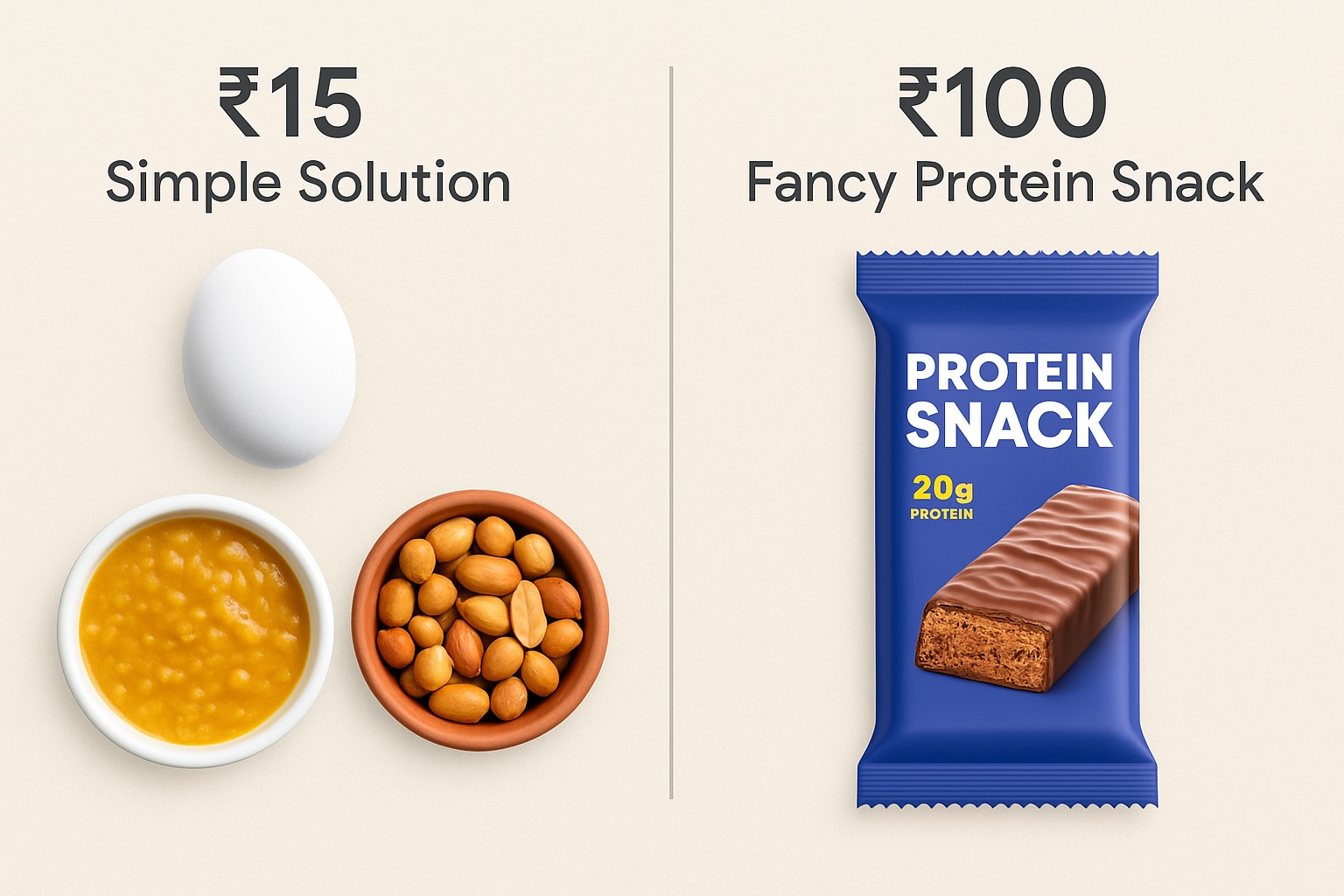
Here’s the fun part — there’s a lot of semantics at play:
All are used interchangeably in ads, even though they have different definitions.
And since most consumers don’t read the fine print, brands often rely on this grey area to position their products as “healthy” or “protein-packed” — even when they barely meet the threshold.
When you read a label next time, flip it over and check:
In other words —
It’s not just about how much protein you’re eating, but how much else you’re getting along with it.
“High protein” isn’t just a buzzword — it’s a regulated claim defined by data.
But whether something is high protein for you depends on your body weight, activity level, and overall calorie intake.
In short:
Because at the end of the day, nutrition is about balance, not buzzwords.