As humans, we love complicated explanations — especially when it comes to health.
We’ve spent years (decades, really) trying to decode obesity, diabetes, and metabolic disorders with increasingly sophisticated models:
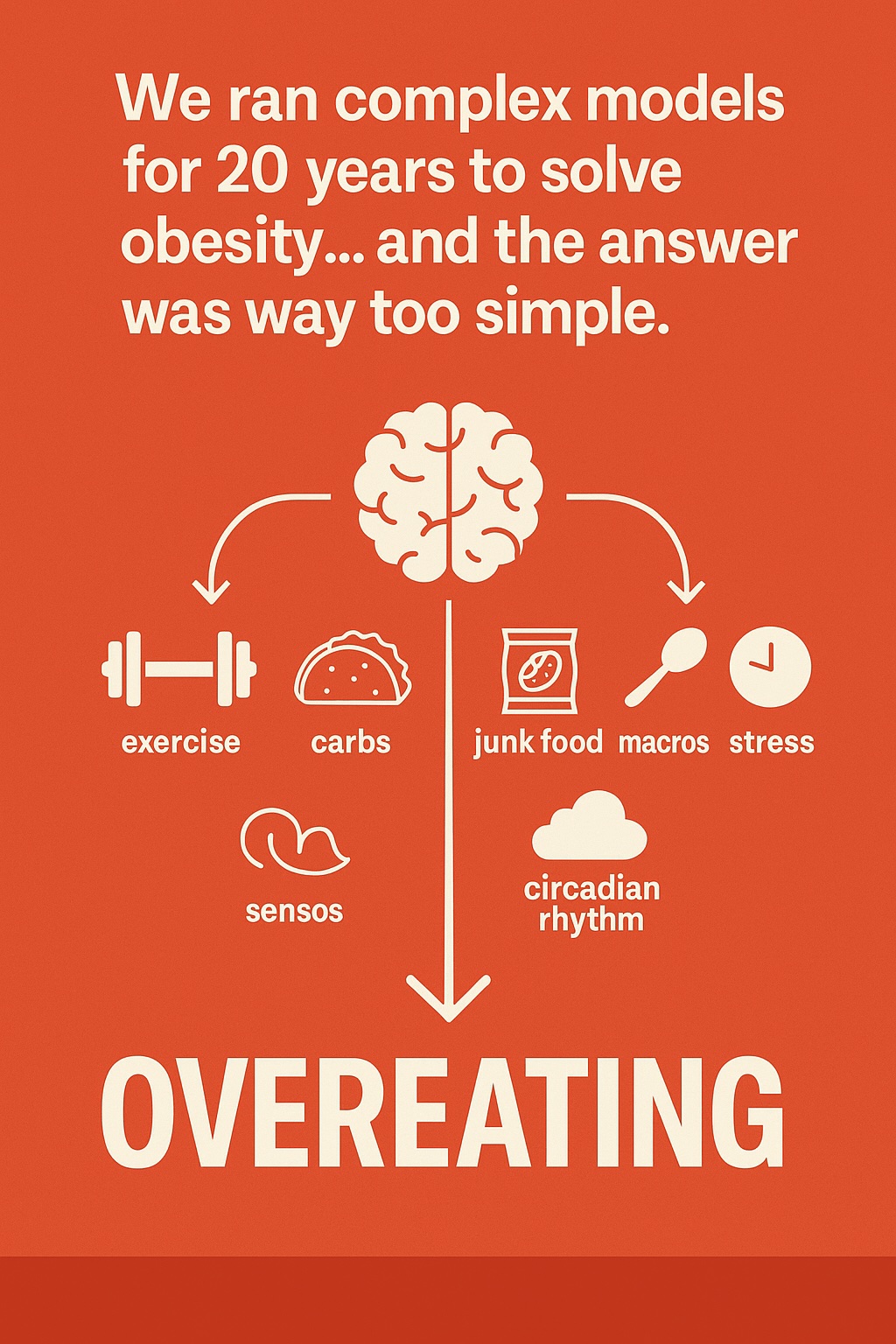
Every year, a new villain gets added to the list.
But what if — despite all the complexity — the real answer is dramatically simpler?
What if the #1 driver of obesity is the most obvious one?
Years ago, during an online statistics program with UC Berkeley on edX, we studied a fascinating case involving Wikipedia.
The problem:
Predict which Wikipedia edits were factually incorrect.
The research team threw every possible variable into a sophisticated multivariate model:
They ran random forests.
Feature engineering.
All the complex stuff you’d expect in a graduate-level data science course.
And after all that?
Only one feature truly mattered.
A single binary variable:
👉 Was the editor logged in or anonymous?
That one factor predicted incorrect submissions with the highest reliability.
Not edit length.
Not topic.
Not timing.
Not word count.
Just login status.
The simplest possible signal turned out to be the strongest.
In nutrition, we’ve made the same mistake Wikipedia researchers initially made:
We’ve overcomplicated the problem.
We’ve blamed every nutrient and habit we can find:
But what if multivariate models are hiding the simplicity?
What if the strongest predictor — the “logged in vs anonymous” of health — is something we already know?
Not because we’re weak.
Not because we lack discipline.
Not because of moral failure.
But because:
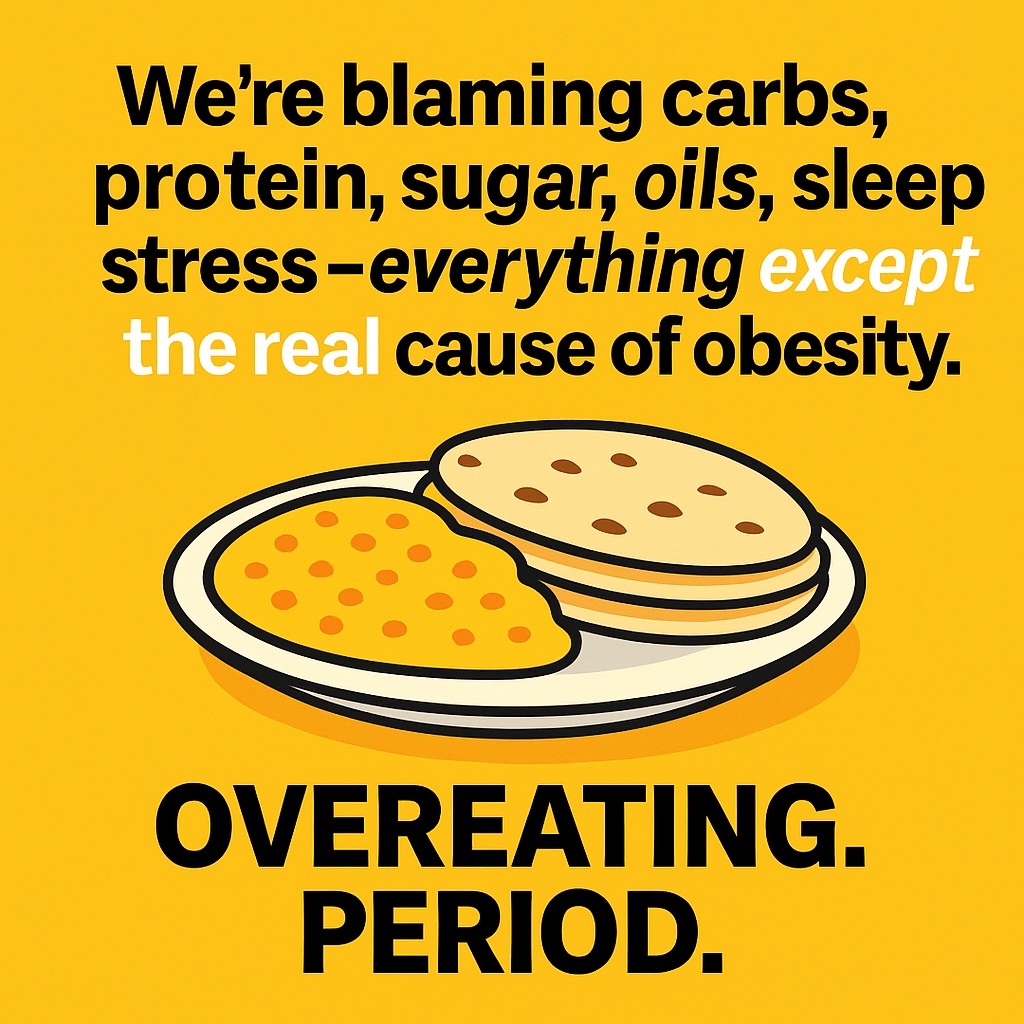
Most people are simply eating more calories than they burn — consistently, quietly, unintentionally.
That’s it.
Overeating is the hidden binary predictor of modern metabolic disease.
The uncomfortable truth is:
The human body — Indian or global — gains fat in a calorie surplus.
And loses fat in a calorie deficit.
Everything else matters after this.
Protein helps.
Fiber helps.
Strength training helps.
Sleep helps.
Stress matters.
Hormones play a role.
But none of these overturn the fundamental physics of energy balance.
We are not in a global obesity crisis because of one nutrient.
We are here because of portion creep and calorie overload.
Indians — both in India and abroad — have a specific metabolic profile:
This means:
But the principle still holds:
Calorie control → metabolic healing.**
Simple, but powerful.
Caddy is designed on the exact philosophy revealed by that Wikipedia case study:
👉 Find the strongest signal.
Ignore the noise.
Build around the truth.
For weight loss, that truth is:
Daily calorie surplus = weight gain.**
Everything else — macros, timing, gut health, exercise — are supporting factors, not primary causes.
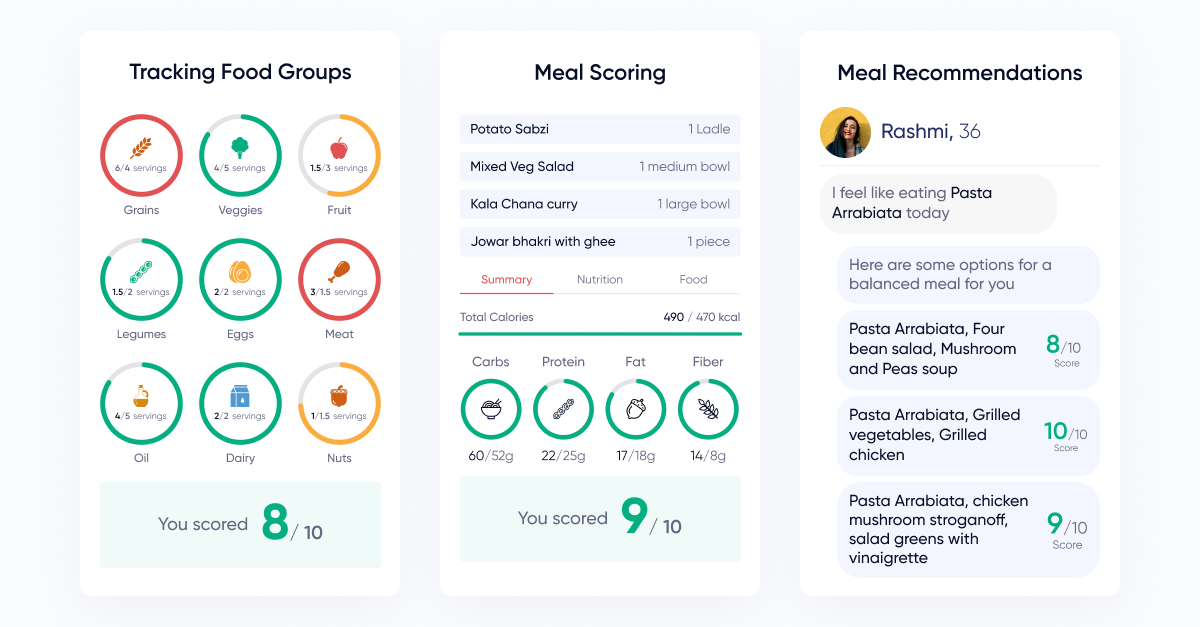
So Caddy simplifies weight loss to:
No complex dashboards.
No 40-metric tracking.
No overcomplicating.
Just the signal — your deficit.

The more we study metabolic health, the more it resembles that Wikipedia case:
But in the end?
Overeating is the logged-in vs anonymous variable of obesity.
We can complicate the story.
But the solution still starts with the simplest foundation:
Sustain it.
Support it with better habits.
And consistency becomes unstoppable.**